Guides / Operations
When the person who knows everything retires
Institutional memory is the largest undocumented asset at most small agencies and heritage railroads. A practical method for getting it out of one head before you need to.
Nearly every small operator we speak to has one: the person who knows why the Tuesday run leaves four minutes early, which crossing the school bus uses, and what the noise from the number two unit means. None of it is written down. Most of it has never been asked about.
This is not a filing problem. It is a dignity problem wearing a filing problem's clothes. That knowledge was built over decades of attention and it deserves to be treated as an asset of the whole operation rather than a private burden.
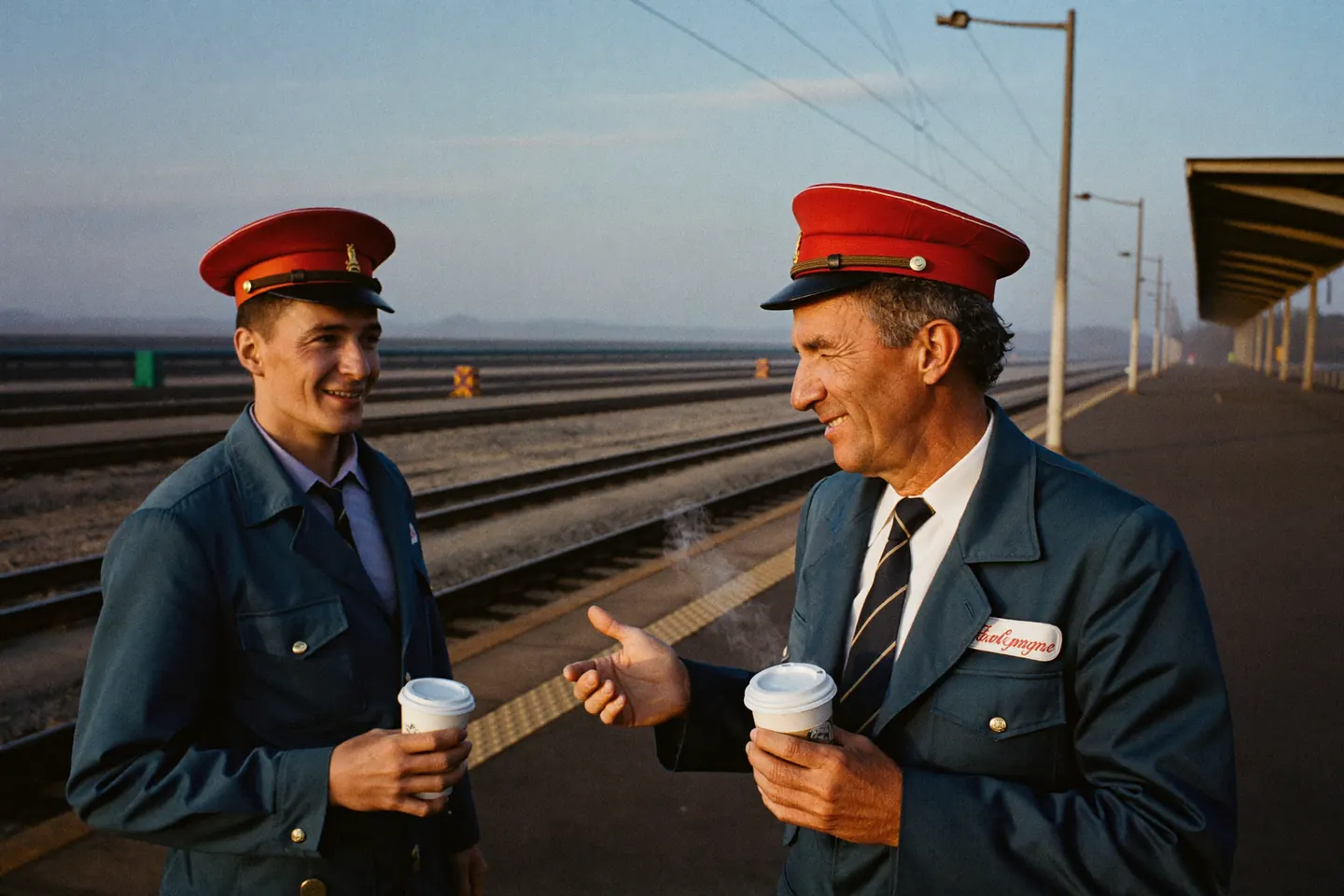
A method that works
- Do not ask them to write a manual. Nobody has ever finished one, and asking implies the knowledge is a backlog rather than a skill.
- Ride along and ask why. Every deviation from the obvious has a reason. Write down the reason, in their words.
- Capture exceptions, not procedure. The normal case is recoverable from the schedule. The exceptions are the irreplaceable part.
- Attach it to the thing. A note about the number two unit belongs on the number two unit's record, not in a shared drive nobody opens.
- Have somebody else run a service change while they watch, silently. What the watcher has to interrupt to correct is exactly the undocumented list.
- Do it two years early. Do it while it is a conversation instead of an emergency.
The measure of a healthy operation is not that nobody is indispensable. It is that nobody is left carrying something alone.
What is actually worth capturing
Not everything. Most of what an experienced person knows is recoverable from the schedule, the manual or common sense. A small fraction of it is not, and that fraction is what you are after.
| Kind of knowledge | Recoverable? | Worth capturing |
|---|---|---|
| The published timetable | Yes — it is written down | No |
| Why a specific run departs early | No — it is a local agreement | Yes, against that run |
| Standard inspection procedure | Yes — it is in the manual | No |
| What the number two unit sounds like when it is about to fail | No | Yes, against that vehicle |
| Which crossing the school bus uses at 07:40 | No | Yes, against the line |
| Who to call at the county when a road closes | No | Yes, as a contact |
The pattern is that the irreplaceable knowledge is almost always attached to a specific thing — a run, a vehicle, a crossing, a person at another organisation. That is why it belongs on the record for that thing rather than in a document called Procedures, which is where it goes to be forgotten.
For heritage and volunteer operations especially
Volunteer-run railroads have a sharper version of this. The knowledge is concentrated in a small number of long-serving people, participation is unpaid, and there is no HR process to lean on. What tends to work is making the record part of the work itself — the inspection captures the note, the run captures the observation — so that documenting costs nobody an extra evening.
Questions
How do we raise this without it sounding like we are managing someone out?
Ask for their judgement rather than their information. 'Can you show me what you would check' is a different conversation from 'can you document your job', and it is also the more accurate request — what you want is the reasoning, not the list.
What if they do not want to?
That reluctance usually has a real cause: the knowledge is the last thing making them necessary. The answer is to make the sharing itself the valued contribution — mentoring is the senior role, not a step towards being replaced.
Read next
- Getting off the spreadsheetWhy small agencies still schedule in Excel, what genuinely goes wrong when they do, and how to move to something better without a six-figure procurement.
- Security when nobody's job title says securityAround thirty percent of 2025 breaches involved a third party. Here is the short list of things a small agency can do without a security budget, ordered by what actually reduces risk.